 +971 6 522 6368
  +971-56-994-6523
  info@resalahphysio.com

Elbow Strain:
Comprehensive Clinical Guide & Physiotherapy Management
Introduction
An elbow strain is a common musculoskeletal injury involving the stretching or tearing of muscle fibers or tendons surrounding the elbow joint. While the elbow is a stable hinge joint, it is subjected to significant mechanical stress during repetitive lifting, gripping, throwing, and pulling activities. Strains frequently affect the flexorpronator muscle group (medially) or the extensor-supinator muscle group (laterally). Left untreated, micro-tears can lead to chronic tendinopathy, persistent weakness, and recurrent functional limitations. At Al Resalah Medical Center, we utilize advanced, evidence-based orthopedic and sports physiotherapy protocols to manage acute inflammation, restore tensile strength, and safely return patients to their daily activities or athletic pursuits.
Symptoms of Elbow Strain
Patients presenting with an elbow strain typically experience symptoms ranging from mild discomfort to acute functional loss, depending on the severity of the tear:
Localized Pain: Sharp pain at the time of injury, which may transition to a dull, aching soreness aggravated by resisted movement or gripping.
Tender Palpation: Heightened tenderness directly over the affected muscle belly, musculotendinous junction, or tendon insertion point.
Swelling and Mild Bruising: Localized soft tissue inflammation or ecchymosis (discoloration) around the injured area in moderate-to-severe strains.
Weakness with Resisted Motion: Difficulty and pain when attempting to bend the wrist, flex/extend the elbow, or grip objects.
Stiffness: Reduced flexibility and post-activity stiffness as the surrounding muscles guard and protect the healing tissue.
Causes of Elbow Strain
Elbow strains usually result from acute overload or cumulative repetitive stress:
Overuse and Repetitive Stress: Continuous, repetitive motions involving the forearm and wrist (such as manual labor, racket sports, weightlifting, or typing) leading to cumulative micro-trauma.
Sudden Heavy Lifting: Overloading the joint by lifting heavy objects with an awkward angle or sudden jerk.
Sports-Specific Trauma: Sudden forceful movements in sports involving throwing, swinging, or direct impact.
Muscle Imbalance & Poor Conditioning: Inadequate warm-up, muscular imbalances between flexors and extensors, or reduced core and shoulder stability altering kinetic chain mechanics.
Advanced Physiotherapy Treatment at Al Resalah Medical Center
Our structured rehabilitation programs target tissue healing and functional restoration through a multi-modality approach:
Comprehensive Clinical Assessment: Evaluating injury grade, range of motion, resisted muscle testing, palpation tenderness, and upper extremity functional demands.
Acute Phase Management (Protection & Pain Control): Utilizing relative rest, activity modification, ice/cryotherapy, and gentle compression to manage inflammation and protect healing fibers.
Soft Tissue & Manual Therapy: Employing myofascial release, instrument-assisted soft tissue mobilization (IASTM), and gentle cross-friction massage to prevent abnormal scar tissue adhesion and promote orderly collagen alignment.
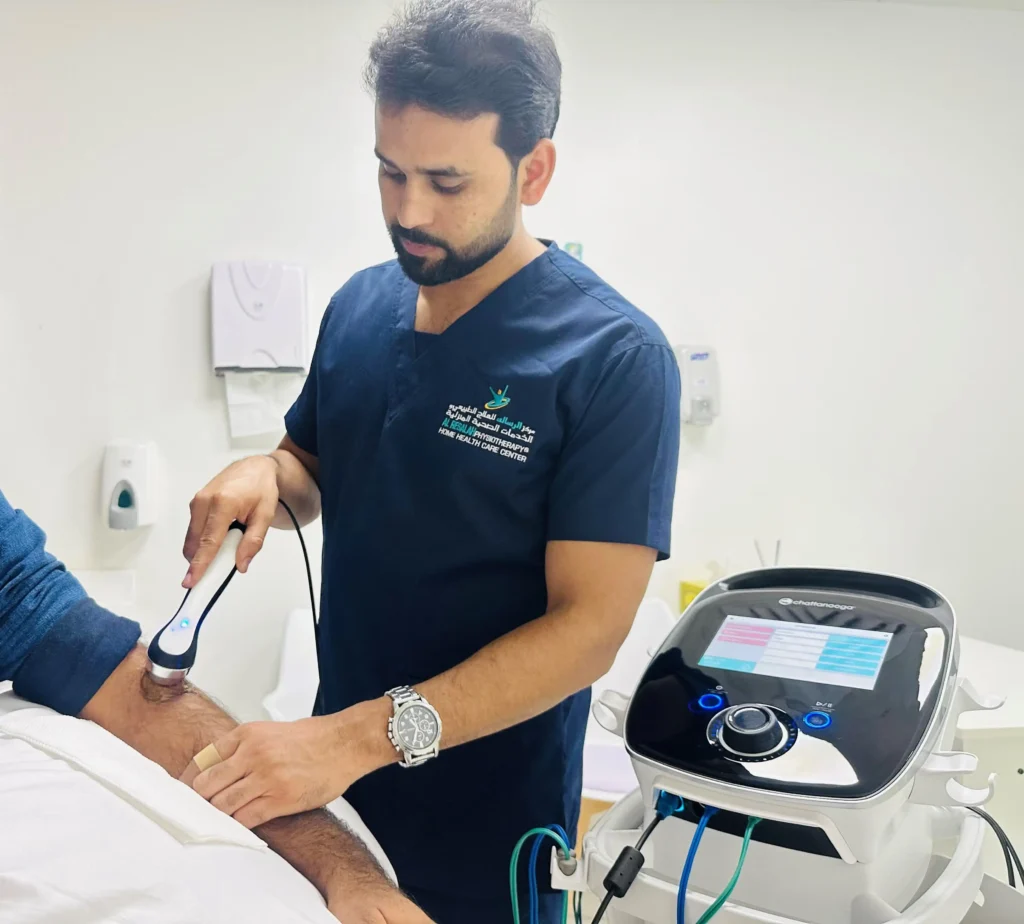
Electrotherapy & Therapeutic Modalities: Deploying modalities such as ultrasound or targeted electrotherapy to ease localized muscle guarding and stimulate cellular repair.
Progressive Loading & Eccentric Strengthening: Gradually introducing isometric exercises, followed by concentric and specialized eccentric strengthening protocols to rebuild tendon and muscle tensile resilience.
Functional & Sport-Specific Retraining: Restoring proper biomechanics, ergonomic correction, and kinetic chain integration to prevent reinjury.
Physiotherapists Who Treat This Condition
Elbow strains and soft tissue injuries at Al Resalah Medical Center are managed by our expert orthopedic and sports physiotherapy specialists:
Shamshad Ali, MPT (Sr. Sports Physiotherapist | 10+ Years Experience) — Specializes in musculoskeletal rehabilitation, sports injury recovery, manual therapy, and functional progression.
Al Resalah Clinical Physiotherapy Team — Delivering comprehensive, evidence-based care tailored to each patient’s specific recovery stage.
Home Exercises for Elbow Strain
To support clinical recovery between sessions, patients are guided through a safe, progressive home exercise program:
Gentle Passive Range of Motion: Move the elbow slowly through its pain-free bending and straightening limits without forcing the end range.
Isometric Wrist Flexion and Extension: Rest your forearm on a table with your hand hanging off the edge. Apply light resistance with your opposite hand without moving the wrist, holding for 5 to 10 seconds to activate the musculature safely.
Eccentric Wrist Extension/Flexion (With Light Resistance): Using a very light weight or band, assist your hand upward with your uninjured hand, then lower it down slowly using only the injured side.
Dynamic Stretch Sequence: Light stretches for the forearm flexors and extensors, holding each position for 30 seconds to maintain flexibility as healing progresses.
Medical Disclaimer
This content is reviewed by licensed physiotherapy professionals at Al Resalah Medical Center and is intended for educational purposes only. Elbow strains can vary in severity from minor micro-tears to complete ruptures requiring medical evaluation. Always consult a qualified physiotherapist or medical professional before initiating any exercise program. Al Resalah Medical Center is an SHA-licensed facility (Ad Licence No: 4XP46ED4-030625).
Written By: Shamshad Ali, MPT (Sr. Sports Physiotherapist)
Reviewed By: Al Resalah Medical Team