 +971 6 522 6368
  +971-56-994-6523
  info@resalahphysio.com
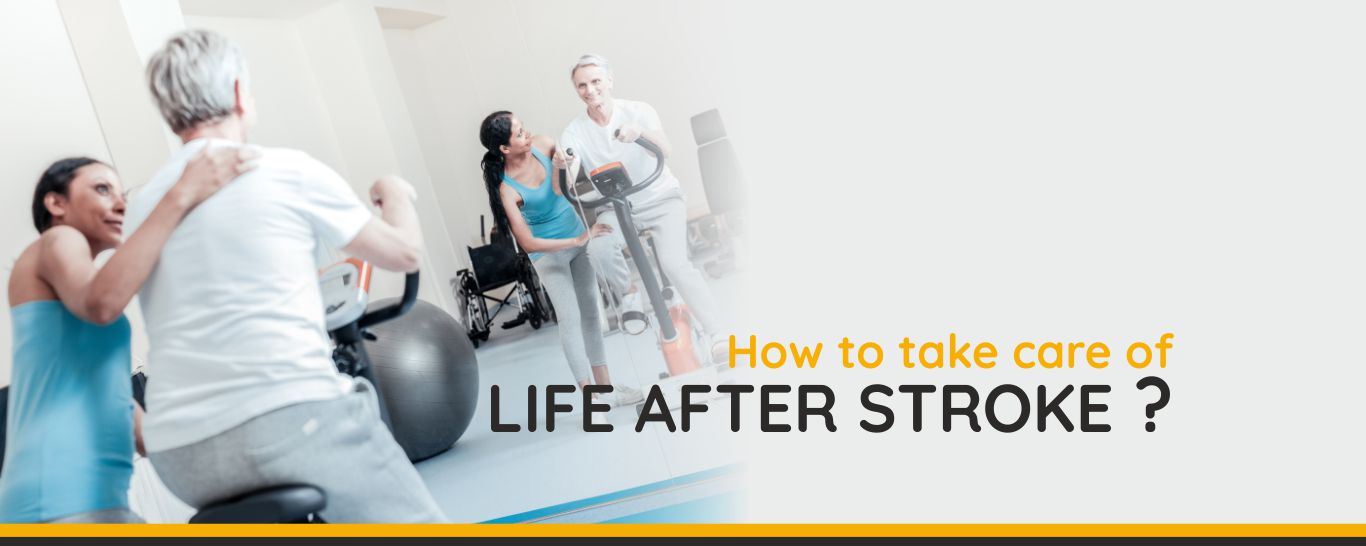
Stroke Rehabilitation & Neuro Physiotherapy in Sharjah & Dubai
Specialized Stroke Recovery Programs to Restore Mobility, Independence & Quality of Life
At Al Resalah Medical Center, we provide evidence-based Stroke Rehabilitation and Neuro Physiotherapy services in Sharjah and Dubai to help stroke survivors regain strength, movement, balance, coordination, and independence in daily life.
Stroke recovery can be physically and emotionally challenging—not only for patients but also for their families. Our goal is to support every patient through a structured rehabilitation journey focused on improving mobility, rebuilding confidence, and enhancing long-term quality of life.
Our rehabilitation programs are supervised by experienced DHA/MOHAP licensed neuro physiotherapists using internationally recognized neurological rehabilitation techniques tailored to each patient’s condition and recovery stage.
Start Your Stroke Recovery Journey Today
Whether your stroke occurred recently or several months or years ago, neuro physiotherapy may help improve strength, balance, mobility, walking ability, and independence. Every recovery journey is unique, and rehabilitation programs are tailored according to each patient’s condition and goals.
Understanding Stroke
A Stroke, also known as a Cerebrovascular Accident (CVA), occurs when blood flow to a part of the brain is interrupted. This may happen due to:
- A blood clot blocking blood supply (Ischemic Stroke)
- A ruptured blood vessel causing bleeding in the brain (Hemorrhagic Stroke)
When the brain does not receive enough oxygen and nutrients, brain cells become damaged, affecting movement, speech, sensation, balance, memory, and daily activities.
The effects of stroke vary from person to person depending on:
- The area of the brain affected
- Severity of the stroke
- Time taken for medical intervention
- Overall health condition
Common Symptoms After Stroke
Stroke survivors may experience:
- Weakness or paralysis on one side of the body
- Difficulty walking or maintaining balance
- Muscle stiffness or spasticity
- Hand function impairment
- Speech and swallowing difficulties
- Fatigue and reduced endurance
- Memory and coordination problems
- Reduced confidence and fear of falling
Early rehabilitation plays a crucial role in improving recovery outcomes and reducing long-term disability.
Why Physiotherapy Is Important After Stroke
Physiotherapy is one of the most important parts of stroke recovery. The brain has an incredible ability called Neuroplasticity, which means it can reorganize and form new pathways after injury.
Through repetitive, task-specific rehabilitation exercises, physiotherapy helps retrain the brain and body to improve:
- Walking ability
- Muscle strength
- Balance and coordination
- Functional movement
- Hand and arm use
- Transfers and mobility
- Daily living activities
- Confidence and independence
Recovery takes time, consistency, and the right rehabilitation approach. Some patients improve within months, while others continue progressing over several years with ongoing therapy.
Common risk factors include: High Blood Pressure, High Cholesterol, Smoking, Physical Inactivity, and Arrhythmia. Managing these is crucial for preventing recurrent events.
Emergency Protocol: Act F.A.S.T.
Face Drooping
One side of the face droops or feels numb. Ask the person to smile.
Arm Weakness
One arm is weak or numb. Ask the person to raise both arms.
Speech Difficulty
Slurred speech, inability to speak, or difficulty understanding.
Time to Call 998/999 (UAE Emergency)
Contact emergency services immediately—every minute counts.
Our Stroke Rehabilitation Approach
Our intervention follows a structured, evidence-based roadmap, guided by continuous assessment and personalized goal setting.
Phase 1: Early Recovery & Medical Stabilization
Following medical clearance, rehabilitation focuses on:
- Early mobilization
- Prevention of complications
- Positioning and pressure care
- Respiratory exercises
- Bed mobility training
Phase 2: Intensive Neuro Rehabilitation
This stage focuses on maximizing recovery through:
- Strength training
- Balance training
- Walking rehabilitation
- Coordination exercises
- Functional movement retraining
- Spasticity management
- Upper limb rehabilitation
Phase 3: Community Reintegratio
As recovery progresses, treatment focuses on:
- Daily living activities
- Functional independence
- Home and community mobility
- Fall prevention strategies
- Long-term fitness and wellness
Leveraging Advanced Techniques & Robotics
Our neuro physiotherapists use evidence-based rehabilitation techniques to help stroke survivors improve mobility, balance, walking ability, coordination, and independence in daily life. by incorporating globally recognized, evidence-based concepts and specialized therapeutic machinery—helping patients improve mobility, balance, walking ability, and functional independence.
Specialized Manual & Neuro-Relearning Methods
01
Neurodevelopmental Treatment (NDT)A hands-on, problem-solving approach to specifically analyze and treat impairments of movement and posture, focusing on quality of movement and functional skills.
02
Proprioceptive Neuromuscular Facilitation (PNF)Utilizing diagonal and spiral movement patterns and strong sensory stimulation to promote motor learning and achieve functional mobility gains.
03
Motor Relearning Theory & Conductive EducationTask-oriented approaches focusing on repetition and specific environmental feedback to help the brain remap motor commands for essential daily activities.
State-of-the-Art Rehabilitation Machinery
R1
Functional Electrical Stimulation (FES)Precisely timed electrical pulses used to activate weakened or paralyzed muscles, immediately improving gait (foot drop correction) and enhancing motor control.
R2
Virtual Reality (VR) Training SystemsImmersive, interactive VR environments used to safely challenge balance, coordination, and cognitive function with high repetition and measurable metrics.
R3
Biofeedback & Sensorimotor Re-educationAdvanced systems that provide real-time feedback on muscle activation, enabling conscious control and improved efficiency in recovering sensory and motor pathways.
Advanced Neuro Rehabilitation Techniques
Our stroke rehabilitation programs incorporate internationally recognized neurological rehabilitation approaches.
Neurodevelopmental Treatment (NDT) – A hands-on treatment approach that improves posture, movement quality, balance, and functional mobility.
Proprioceptive Neuromuscular Facilitation (PNF) – Specialized movement patterns designed to stimulate muscle activation and improve coordinated movement.
Gait Training – Focused rehabilitation to improve walking efficiency, weight transfer, posture, and confidence during movement.
Balance & Coordination Training – Exercises designed to improve stability, reduce fall risk, and enhance functional independence.
Manual Therapy – Hands-on techniques used to improve joint mobility, flexibility, posture, and movement quality.
Meet Our Senior Neuro Physiotherapist
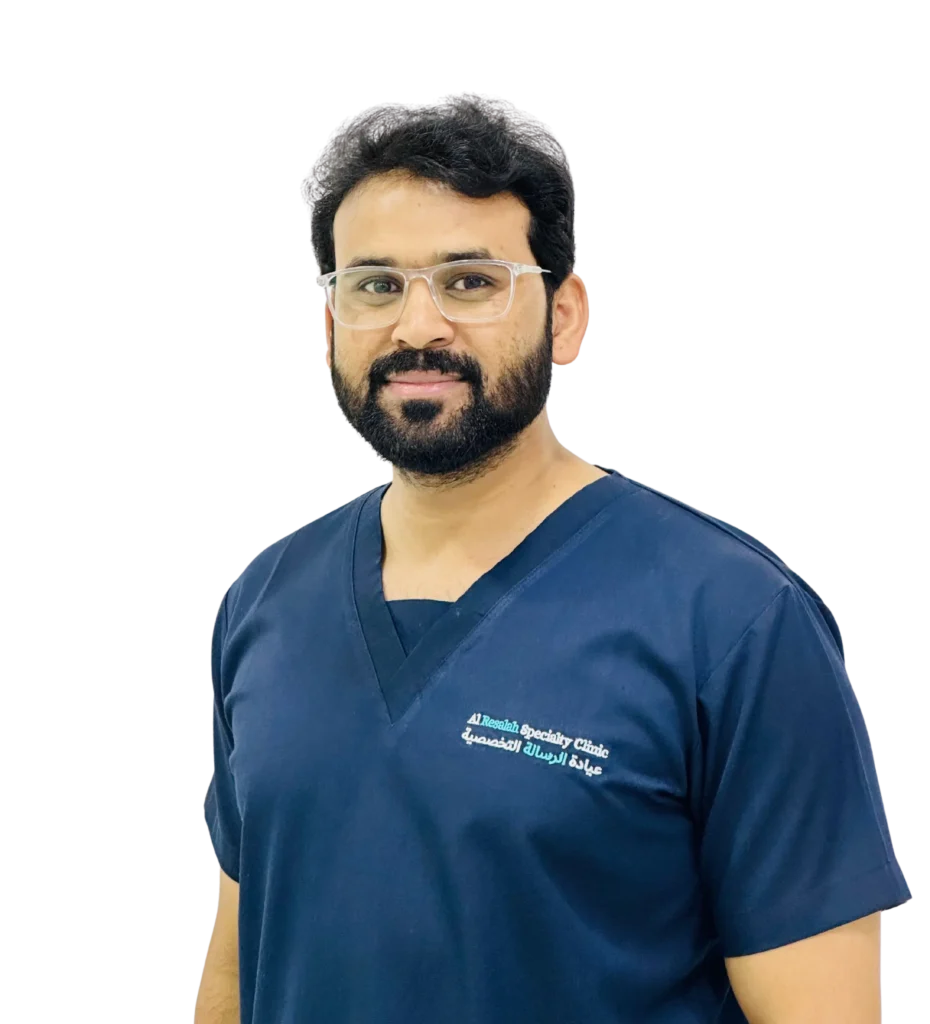
Majid Husain, MPT
Master of Physiotherapy (Neuro Science) | SHA Licensed Physiotherapist | 10+ Years of Clinical Experience in Neuro Rehabilitation
Majid Husain is a highly qualified and compassionate physiotherapist with more than 10 years of experience specializing in Neuro Rehabilitation and Spine Rehabilitation.
He completed his Bachelor of Physiotherapy from H.N.B Garhwal Central University, India in 2014 and later earned a Master of Physiotherapy (MPT) in Neuro Science in 2019.
Before joining Al Resalah Medical Center, he gained valuable clinical experience at BLK Super Speciality Hospital in India, where he worked with patients suffering from complex neurological and musculoskeletal conditions.
🌟 “Majid Husain follows a patient-centered neuro rehabilitation approach focused on improving mobility, independence, balance, and overall quality of life through evidence-based physiotherapy and compassionate care.”
Areas of Expertise
Majid specializes in rehabilitation for:
- Brain Stroke
- Spinal Cord Injuries
- Parkinsonism
- Multiple Sclerosis
- Cerebral Palsy
- Guillain-Barré Syndrome (GBS)
- Balance Disorders
- Neurological Rehabilitation
Therapeutic Approaches Used
His rehabilitation approach combines evidence-based techniques including:
- Neurodevelopmental Treatment (NDT)
- Proprioceptive Neuromuscular Facilitation (PNF)
- Manual Therapy
- Gait Training
- Balance Training
- Coordination Exercises
- MET (Muscle Energy Techniques)
- MRP Techniques
Majid believes in individualized rehabilitation programs designed according to each patient’s functional goals, physical condition, and recovery potential.
Family Support & Caregiver Education
Stroke recovery often requires support from family members and caregivers. Our team provides guidance on:
- Safe patient handling techniques
- Home exercise programs
- Fall prevention strategies
- Mobility assistance
- Promoting independence safely
- Long-term rehabilitation planning
We believe successful recovery involves both patient participation and family support.
Why Choose Al Resalah Medical Center for Stroke Rehabilitation in Sharjah?
Experienced Neuro Physiotherapy Team
Dedicated physiotherapists experienced in neurological rehabilitation.
Individualized Rehabilitation Plans
Customized programs based on each patient’s condition and goals.
Evidence-Based Treatment
Internationally recognized rehabilitation approaches supported by current clinical practice.
Comprehensive Care
Focus on physical recovery, emotional well-being, and functional independence.
Patient & Family Education
Ongoing support throughout the rehabilitation journey.
Convenient Location in Sharjah
Accessible care for patients seeking stroke rehabilitation and neuro physiotherapy services.
Frequently Asked Questions (FAQs)
Recovery varies depending on the severity of the stroke, age, medical condition, and consistency of rehabilitation. Many patients achieve significant improvements with structured therapy.
Yes. Research and clinical experience show that many chronic stroke survivors can continue to improve through neuro rehabilitation and functional training.
Rehabilitation should begin as early as medically appropriate following stabilization and physician clearance.
Every patient is different. Recovery may take weeks, months, or even years depending on the condition and rehabilitation goals.
Neuroplasticity is the brain’s ability to reorganize and create new neural pathways after injury, allowing recovery of lost functions through rehabilitation.
Yes, Home physiotherapy services may be available depending on patient requirements and location.
Medically Reviewed By
Majid Husain, MPT (Neuro Science)
Senior Neuro Physiotherapist
SHA Licensed Physiotherapist
10+ Years Experience in Neuro Rehabilitation
Last reviewed: May 2026